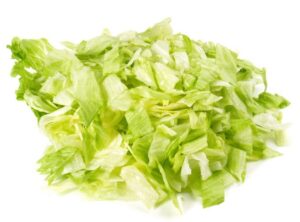
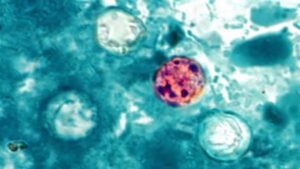
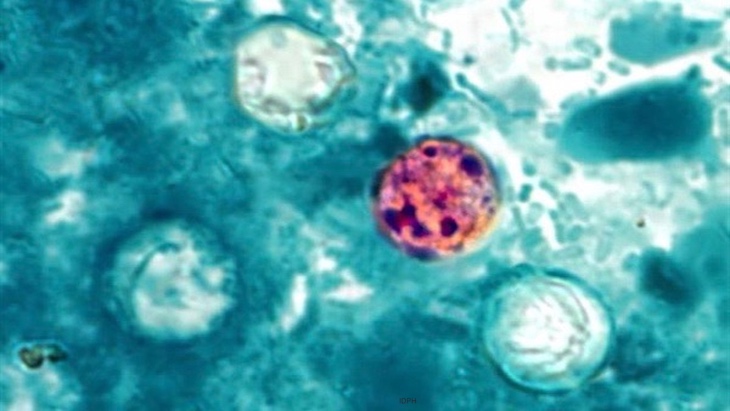
Consumer Reports wants cyclospora outbreak answers from the FDA and CDC after a summer where tens of thousands of Americans were sickened by that parasite. In this outbreak, at least 12,883 people were sickened by shredded iceberg lettuce supplied by Taylor Farms de Mexico, and and additional 7,000 were sickened by an unknown source.
The investigation was closed earlier this month. This infection also led to 570 hospitalizations and contributed to two deaths of people who lived in Michigan.
The extent of the reach of the lettuce was staggering. Taylor Farms sold it to Taco Bell, Walmart, Subway, and Jack in the Box, and used it in bagged salad mixes.
The FDA found the cyclospora parasite in a drainage ditch of a farm in Mexico where the iceberg lettuce was grown. It was also found in a wastewater tank where the lettuce was processed, but the agency said they couldn’t definitely place the blame on any one company or grower.
Consumer Reports says it has concerns about four points. They say that it was difficult for consumers to understand the recall and that information from the FDA and CDC was confusing and contradictory. They also want to know why the the traceability rule set by the Food Safety Modernization Act of 2011 was pushed back to July 2028 from January 2026, and they want to know more about the plans to protect Americans from the next outbreak.
Recalls Were Vague and Difficult to Understand
The recall was first issued in July, but no products were named. The recall was updated but products were listed in internal shorthand. For instance, a bagged salad mix sold at Walmart was marked “MKTSD Iceberg Salad, 12 oz, 24 oz” and another recalled product was identified as “BLEND LETT/ROM 50/50 NOCLR 4/5#.” An FDA Enforcement Report identified the companies who purchased the lettuce, but was issued weeks later.
FDA and CDC Reports Were Contradictory
The FDA announced that a sample of Taylor Farms’ iceberg lettuce tested positive for cyclospora in early October, but this was retracted the next day. Taylor Farms claimed this showed their product wasn’t the source of the outbreak, even though very strong epidemiological evidence pointed to the lettuce, adding to the confusion. Taylor Farms took down social media posts about this retraction.
In addition, individual states started reporting case counts, and those numbers varied wildly from the numbers the CDC was reporting. For instance, Michigan reported 15,472 people sick with cyclosporiasis, while the CDC’s number was a range from 4,000 to 6,999 cases.
Traceability Rule Pushed Back
Traceability is a big deal in outbreaks. If the government can figure out where the food that is making people sick comes from, it can halt distribution of that food and warn restaurants, grocery stores, and the public to avoid that food. The FDA pushed back the traceability rule in the Food Safety Modernization Act, ostensibly to give companies more time to comply, but they already had 15 years from the time the Act was signed into law.
What Will the FDA Do Next Year?
The FDA published a list of 10 actions it will put in place before the next cyclospora season starts in May, such as surveilling high risk foods, and working for a way to genotype cyclospora to make easier to trace outbreaks to the food that caused it. But budget cuts, and the loss of programs such as a traceability rule may hamper those efforts.
So what can consumers do? The same old advice – watch for recalls and outbreaks, and cook your food thoroughly – doesn’t apply to cyclospora, which usually contaminates food that is eaten uncooked, and is difficult to remove by washing. If you are in a high risk group for serious complications from food poisoning, it may be a good idea to avoid eating raw leafy greens during the cyclospora season, which runs from May 1 to August 31. Choosing cooked greens, such as collards and spinach, is a safer choice.