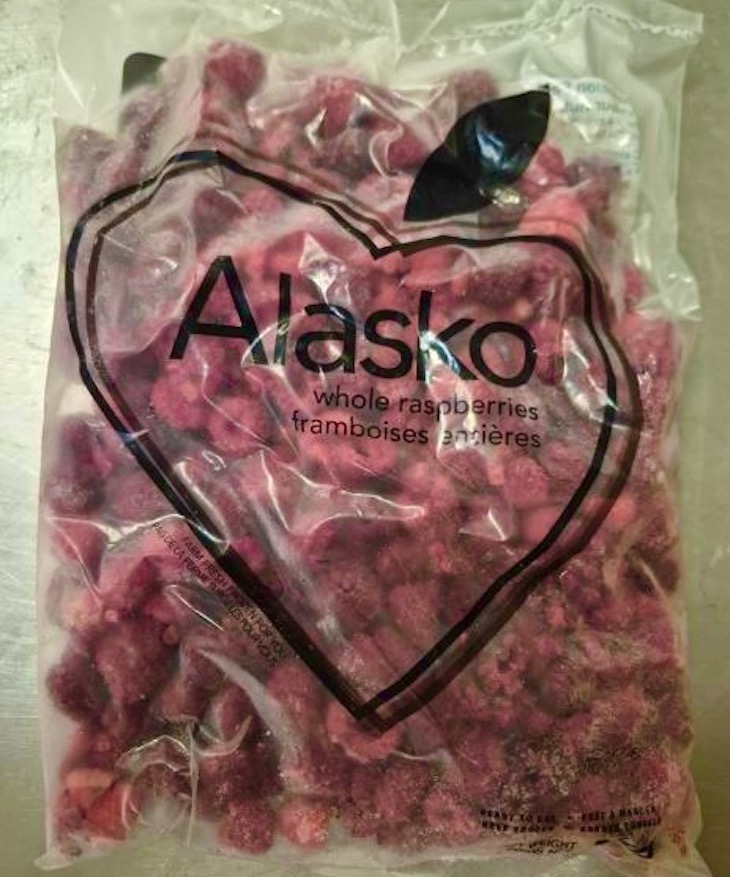
Alasko Frozen Raspberries are being recalled in Canada for possible norovirus contamination. There is a norovirus outbreak that is associated with this product, but there is no separate notice about the outbreak yet, so we don’t know the patient age range, illness onset dates, or if anyone has been hospitalized. This information is on the recall page. The recalling firm is New Alasko L.P.
These raspberries were sold at the retail level and to restaurants, hotels, and institutions in these provinces: Manitoba, New Brunswick, Newfoundland and Labrador, Nova Scotia, Ontario, Prince Edward Island, and Quebec.
The recalled products include Alaska Frozen Raspberries, Whole, packaged in 1 kilogram plastic bags. There is a black heart on the package with the word “Alasko” inside it. The UPC number that is stamped on the product label is 6 95058 00205 4. The PO number is 138602 and the lot number is SY25314. The best if used by date is November 10, 2027.
Also recalled is Alasko IQF (Individually Quick Frozen) Whole Raspberries. They are packaged in 5 kilogram lots of five packages that weigh 1 kilogram each. The UPC number for this item is 1 069505 800205 1. The lot number is SY25314, the PO number is 138602, and the best if used by date is November 10, 2027.
If you purchased these raspberries, do not eat them and do not sell or serve them to others. You can throw them away in a secure trash can after first double bagging them so other people can’t see them, or you can contact your distributor to arrange for a refund, or return them to the store where you bought them.
If you ate these raspberries, especially if they were eaten uncooked, monitor your health for the symptoms of norovirus for the next few days. If you do get sick, see your doctor. Most people do not need medical care, but some, especially the elderly, the very young, pregnant women, and people with chronic illnesses and compromised immune systems, may need care.