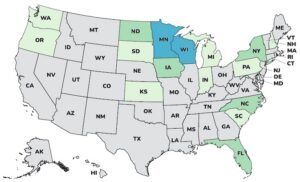
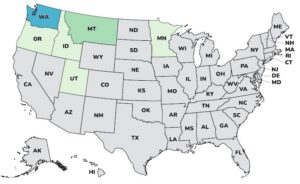
The CDC counts 28 people sick in 13 states in the Salmonella Telelkebir outbreak linked to raw oysters harvested from the Little Wicomico River in Virginia. Five of them have been hospitalized and no deaths have been reported, according to CDC’s October 30 notice. CDC says their illnesses began between May 29 and October 6, 2026, and that epidemiologic, laboratory and traceback data show that oysters harvested by the Little Wicomico Oyster Company from the Little Wicomico River harvest area made people sick in this outbreak. We first reported the outbreak at 27 cases on October 20.
On October 21, the Virginia Department of Health counted 55 cases in 19 states in a wider Salmonella Telelkebir investigation, and this post first reported that number. VDH’s page, updated October 22, no longer gives it. In its November 4 update, VDH says CDC is focusing its investigation on a genomic subgroup of highly genetically related cases, and that there are additional Salmonella Telelkebir cases beyond that subgroup. Other states and federal partners are investigating those cases, and VDH says the source of those illnesses has not yet been determined.
Of the 14 people CDC has interviewed, 11 reported eating raw oysters, and VDH says shellfish tag and traceback information is available for seven people who ate raw oysters. Two ate oysters from a single source, in Virginia. The other five ate oysters from more than one source. For each of them, one possible source was the same Virginia growing area, and VDH lists their other sources as Virginia, New Jersey, Massachusetts, Georgia/Canada, or Virginia/New Jersey/Massachusetts. VDH says raw oysters from a single Virginia harvest area, the Little Wicomico River, are the likely source of the illnesses in this group.
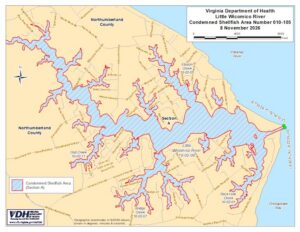
CDC and FDA linked the outbreak to raw oysters harvested by the Little Wicomico Oyster Company from the Little Wicomico River in Virginia. They were the only oysters in common to the seven sick people included in traceback, according to VDH. The company recalled shellstock oysters harvested from September 18 through October 8, 2026. The FDA says they were distributed to restaurants and retailers in California, Colorado, Connecticut, the District of Columbia, Delaware, Florida, Georgia, Illinois, Maryland, Missouri, North Carolina, New Jersey, Nevada, New York, Pennsylvania, Texas and Virginia, and may have been distributed further. VDH collected oysters from the river on October 13 and again on October 21 for testing. On October 23 it reported that all eight meat samples from the October 13 collection tested positive for Salmonella, and its page as updated October 27 says whole genome sequencing showed that some of those samples carried the outbreak strain, Salmonella Telelkebir, along with two other strains, Salmonella Newport and Salmonella Hartford.
CDC says the Newport and Hartford strains did not match any other sick people in its PulseNet database. In VDH’s October 21 round, composite samples from three of the company’s four leases tested positive for Salmonella and samples from the fourth lease were negative; VDH’s page, last updated November 4, says sequencing results for the positive samples are pending. Oysters VDH sampled from public harvest grounds in the river on October 26 tested negative for Salmonella. VDH collected a third round of Little Wicomico Oyster Company oysters on November 2 and has not posted results for that round or for samples it collected October 22 to test for fecal contamination. It says reopening the harvest area will require three consecutive rounds of testing with negative results, and that because of the positive results from the October 13 and October 21 samples, the harvest area will stay closed beyond the end of the 30-day emergency closure. Pennsylvania officials also tested Little Wicomico Oyster Company oysters collected from a distributor that supplied restaurants where sick people ate raw oysters. CDC says a different strain, Salmonella Litchfield, was identified in those oysters and did not match any other sick people in PulseNet.
Salmonella can lead to hospitalization, especially for young children, older adults and people with weakened immune systems. If you or someone in your family was hospitalized after eating raw oysters, the Salmonella lawyers at Pritzker Hageman can answer your questions about this outbreak.
If you ate oysters and have been ill with the symptoms of a Salmonella infection, especially if the oysters came from the Little Wicomico River, see your doctor. You may be part of this outbreak.