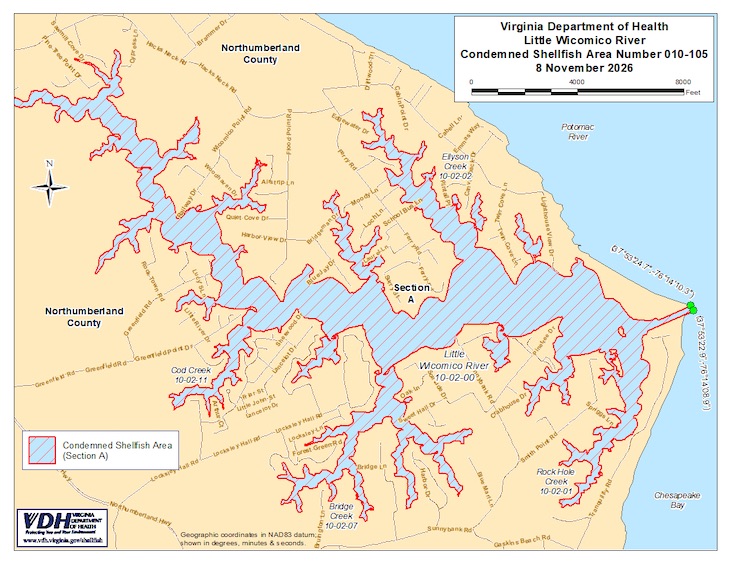
Virginia extends closure of Little Wicomico River in relation to the multistate Salmonella Telekibir outbreak linked to raw oysters harvested from that body of water. An emergency shellfish harvesting closure was announced when the outbreak was discovered in October 2026. That temporary closure was to extend to November 7, 2026.
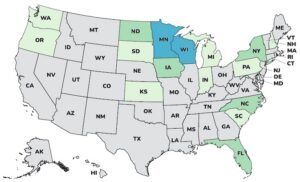
In that outbreak, there are at least 28 people sick in 13 states. The case count by state is: Connecticut (1), Florida (1), Iowa (1), Illinois (1), Kentucky (1), Michigan (1), New Jersey (1), Colorado (2), Indiana (2), Maryland (2), Virginia (3), New York (4), and Pennsylvania (8). The new state is Indiana. The patient age range is from 1 to 86 years. And illness onset dates range from May 29, 2026 to October 6, 2026. Five people have been hospitalized because they are so ill.
The oysters were harvested from the Wicomico River by the Little Wicomico Oyster Company in Virginia. A safety alert was issued by the FDA. The oysters are whole (shellstock) oysters, batch VA-1421-SP that were harvested from September 18 through October 8, 2026.
The oysters were sold to restaurants and retailers in the states of California, Colorado, Connecticut, Delaware, Florida, Georgia, Illinois, Maryland, Missouri, North Carolina, New Jersey, Nevada, New York, Pennsylvania, Texas, Virginia, and Washington D.C. They may have been sold in other states.
The Shellfish Area Condemnation is dated effective November 8, 2026. It states, “Condemned Shellfish Area Number 010-105, shown as Section A, is hereby established effective 8 November 2026. It shall be unlawful for any person, firm, or corporation to take shellfish from these areas for any purpose, except by permit granted by the Marine Resources Commission, as provided in § 28.2-810 of the Code of Virginia. The boundaries of these areas are shown on the maps titled “Little Wicomico River, Condemned Shellfish Area Number 010-105, 8 November 2026” which is part of this notice.”
If you purchased these oysters, do not eat, sell, or serve them to others. Throw them away in a secure trash can, or return them to your distributor or store where you bought them. Then wash items and surfaces that may have touched the recalled oysters using hot soapy water or a dishwasher.
If you ate these oysters, monitor your health for the symptoms of a Salmonella food poisoning infection for the next week. If you do get sick, see your doctor.