There is a huge cyclospora outbreak going on across the United States that has sickened thousands of people. People are understandably concerned, and are searching for ways to protect themselves and their families. Unfortunately, there is lots of bad advice on the internet. We are here to tell you the methods that don’t destroy cyclospora. And what does work.
According to the Centers For Disease Control and Prevention (CDC), there are 4,173 cases of cyclosporiasis in the country as of July 21, 2026. This number pales in comparison to counts from various states.
For instance, Michigan alone reports 7,171 cases as of July 21, 2026. Ohio reports 2,149. Using the multiplier of 83.1, which is the number epidemiologists use to estimate case counts since many people don’t see a doctor, there are most likely 774,492 patients in just those two states.
States reporting illnesses as of July 22, 2026 include Washington, Idaho, Wyoming, Alaska, California, Arizona, Utah, Nevada, Colorado, Nebraska, Kansas, Oklahoma, Texas, Minnesota, Iowa, North Dakota, Missouri, Wisconsin, Arkansas, Louisiana, Illinois, Indiana, Kentucky, Tennessee, Ohio, Michigan, Virginia, West Virginia, Rhode Island, North Carolina, Mississippi, Alabama, Georgia, Florida, New York, Pennsylvania, New Jersey, Connecticut, Massachusetts, New Hampshire, and Maryland.
Unfortunately, we do not know the infectious dose of cyclospora (how many spores it takes to make someone sick). That means if you are in a high risk group for serious complications from a food infection, you need to make every effort to avoid ingesting this parasite, since ingesting just one may make you sick.
Cleaning Methods That Don’t Destroy Cyclospora
Experts recommend that you thoroughly rinse all produce before peeling, cutting, or eating it. This advice holds even when there isn’t a cyclospora outbreak.
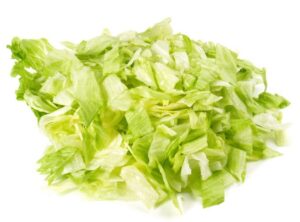
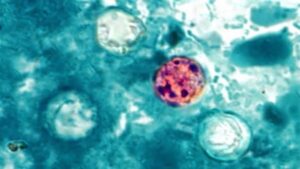
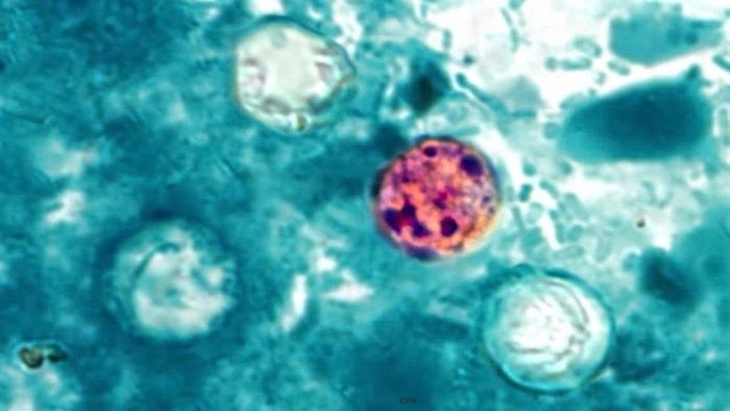
The problem is that the microscopic parasite clings tightly to produce and can hide in small crevices and folds in foods such as lettuce, raspberries, and fresh herbs. That’s why people are searching for ways to remove it from fruits and vegetables.
Vinegar
Vinegar seems like it would be strong enough to destroy cyclospora spores. But the oocyst is very tough and has a protective coating that shields it against acidic solutions.
However, studies have shown that soaking produce such as raspberries in a vinegar solution, then agitating the berries in the solution and rinsing thoroughly, can remove up to 85% of the oocysts. Experts think that the agitating and soaking may help more than the vinegar. But understand that you can still get sick using this method.
Bleach
First of all, don’t put bleach on your food. It is not safe to ingest. Bleach is not effective against cyclospora and won’t kill it. Bleach won’t destroy the oocyst when used on floors and other surfaces.
Freezing
The cyclospora oocyst will survive freezing temperatures. So frozen foods are not safe to eat if you just thaw them. When you buy frozen produce, cook it thoroughly before eating it.
Chlorine
This chemical has been used in a mild solution on farms to wash stone fruits, leafy greens, peppers, melons, cabbage, green onions, cucumbers, and root vegetables after harvest. Berries should not be cleaned with a chlorine solution. But since it’s ineffective against cyclospora, there’s no reason to use it.
Soap and Water
Use soap and water to wash your hands before preparing food and before eating. But don’t use soap on fruits and vegetables. It can leave chemical residues on food. And soap will not kill the parasite.
Commercial Produce Washes
Again, because of its protective coating, commercial produce washes will not destroy cyclospora.
So What Does Destroy Cyclospora?
Heat. That’s it. The oocyst is destroyed when it is heated to 158°F. That’s why it’s important to use a reliable food thermometer when you cook and reheat food.
You can reduce the number of oocysts on produce if you follow a few rules. First, wash everything carefully. Remove the outer leaves of lettuce heads and clean it leaf by leaf. Scrub produce such as avocados with a clean brush under running water before peeling it.
Now that you know the methods that don’t destroy cyclospora, you may want to cook everything before you eat it until this outbreak is over. Choose greens that are typically cooked before eating, such as collards. Canned foods are safe, so enjoy jams and jellies instead of fresh fruit. And always, always use your food thermometer.