While Food Poisoning Bulletin has had an article on how to clean your fridge after a recall for years, we noticed that we should also have a piece on how to clean your kitchen after a food or supplement recall. After all, not all recalled items that are contaminated with pathogenic bacteria are stored in the refrigerator or freezer.
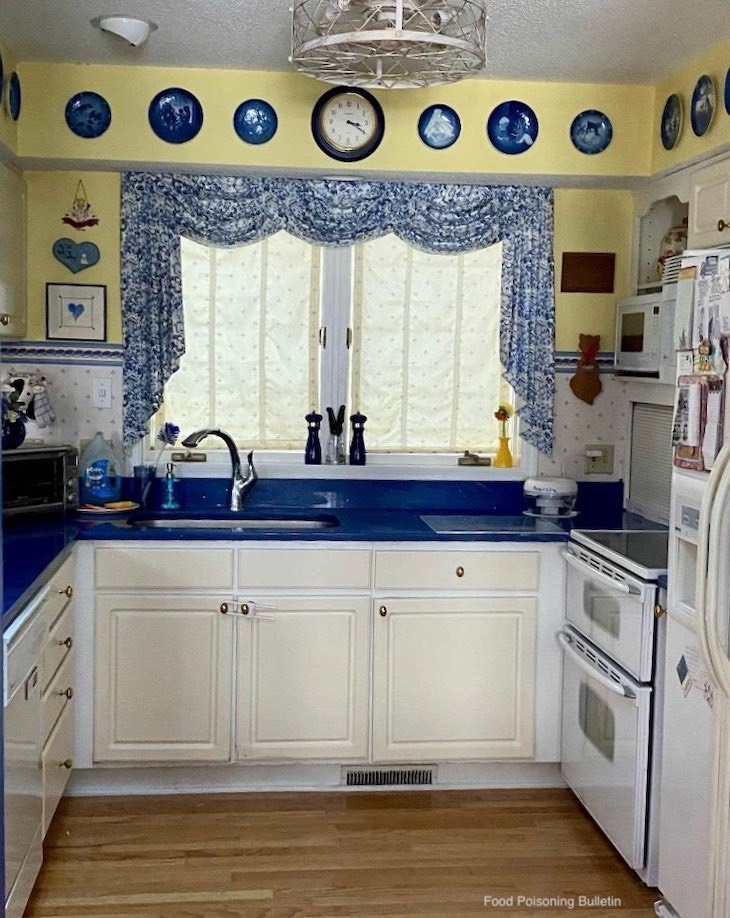
The USDA puts it plainly: clean, then sanitize. It’s usually not enough to just wipe down surfaces after you have discarded a potentially contaminated product. Sanitizing is a critical step toward making your kitchen safe again.
Of course, the first step is knowing about recalls from the FDA and USDA. You can subscribe to our newsletter for up to date information.
Once you have learned that a product you purchased has been recalled, you need to throw it away or take it back to the store where you bought it. Then, if the product was contaminated with pathogens, whether chemical, bacterial, or viral, a kitchen cleaning is necessary. Remember that many pathogens can survive on surfaces for hours or more than a day.
Use warm, soapy water to clean the kitchen sink; countertops; cutting boards; shelves in your pantry; refrigerator shelves, drawers, and handles; the inside of your freezer; handles of drawers and cabinets; and any containers that may have come into contact with the product. Use single use towels or paper towels to clean and to dry. You can use kitchen towels for cleaning and drying, but they must be frequently washed in the hot cycle of your washing machine.
After you have finished cleaning, wash your hands with soap and water. Then get ready to sanitize. You can use a solution of 1 tablespoon liquid chorine bleach for every gallon of water, or you can buy a commercial sanitizer.
Pour or spray the solution on the surfaces, and wipe them clean and dry with a paper towel. Follow the manufacturer’s directions if you use a commercial sanitizer. Make sure the surfaces are completely dry before you use them again.
For utensils, plates, bowls, and cups, the dishwasher is the best way to sanitize. You can even clean cutting boards in the dishwasher. Run these pieces through a full cycle.
Once your kitchen is clean you can relax, knowing that you a re doing all you can to protect your family. Of course, you must still remain aware of recalls in the future, and use good food safety practices whenever you are cooking and baking.