Wild mushrooms have sickened 21 people in California with amatoxin poisoning, according to the California Department of Public Health (CDPH). Those sickened have severe liver damage, and one adult died. The patients include adults and children. Significant clusters are in the San Francisco Bay and Monterey areas, although the risk is statewide.
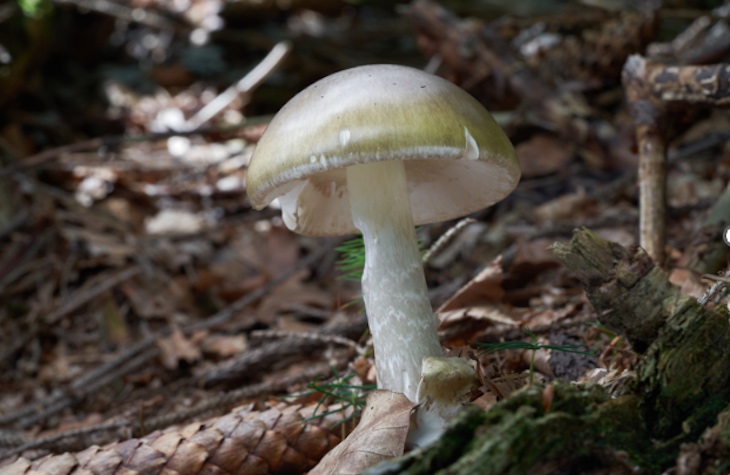
Image courtesy of CDPH
Dr. Erica Pan, CDPH Director and State Public Health Officer, said in a statement, “Death cap mushrooms contain potentially deadly toxins that can lead to liver failure. Because the death cap can easily be mistaken for edible safe mushrooms, we advise the public not to forage for wild mushrooms at all during this high-risk season.”
Mushroom identification can be tricky, and even experts can be fooled. Many toxic mushrooms such as the death cap, pictured, can be mistaken for edible mushrooms. Cooking, boiling, drying, or freezing does not neutralize the toxin and does not make the mushrooms safe to eat.
The risky time for foraging mushrooms is from mid-November to early December. Those sickened likely ate Amanita phalloides, or the death cap mushroom. Some of the patients had to be hospitalized in the intensive care unit, and one person may need a liver transplant.
Death cap mushrooms are found in many parts of California, especially near oaks and other hardwood trees, including pine trees. Rain events in the fall and winter create ideal growth conditions for these fungi. Not only should consumers avoid foraging at this time, but they should only eat mushrooms purchased from reputable stores or known commercial sources.
Symptoms of amatoxin poisoning include watery diarrhea, nausea, vomiting, abdominal apron, and dehydration. People usually feel better after a day or so, but then serious to fatal liver damage can develop within 48 to 96 hours.