California wild Death Cap mushrooms have sickened at least 39 people and killed three, according to the California Department of Public Health (CDPH). Foraging for wild mushrooms can be dangerous, especially for the inexperienced. The problem is that poisonous wild mushrooms can look much like edible mushrooms.
Illness onset dates range from November 18, 2025 to January 18, 2026. The counties where patients live include Alameda, Contra Costa, Monterey, San Francisco, San Luis Obispo, San Mateo, Sacramento, Santa Clara, Santa Cruz, and Sonoma. About 60% of the patients spoke Spanish as their primary language.
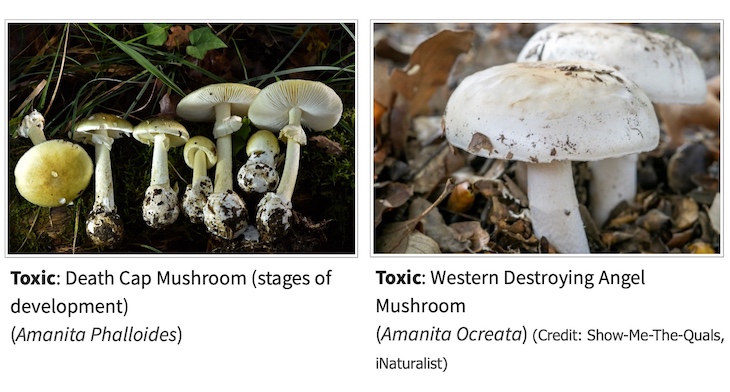
During California’s rainy season, wild mushrooms start to grow in many areas of the state. The two most toxic are the Death Cap mushroom (Amanita phalloides) and the Western Destroying Angel Mushroom (Amanita acreata).
These mushrooms can look and taste similar to safe mushrooms, and can look like the mushrooms you buy in the grocery store. And newly arrived people who are accustomed tow foraging in their home country may mistake poisonous mushrooms in California for safe mushrooms in their native country. Foragers in California face great risk.
The best way to stay safe is to not eat wild mushrooms. Do not eat mushrooms foraged by friends or family. Watch children closely when they play outside where mushrooms grow. Most poisonings happen to children under the age of 6. Keep animals away from wild mushrooms, and only buy mushrooms from trusted retailers. Street vendors may not be selling safe mushrooms.
Remember that cooking, boiling, freezing, or drying poisoning mushrooms doesn’t make them safe to eat.
Symptoms of mushroom poisoning usually take 6 to 24 hours to manifests. Mild symptoms, even mild nausea, can be the beginning of a more severe reactions. Early symptoms may go away within a day but serious to fatal liver damage can still develop within 2 to 3 days.
Seek help immediately if you or someone you know has eaten a poisonous mushroom. Don’t wait for symptoms to appear, since treatment is more difficult when symptoms have started. For more information, the California Poison Control Hotline is 1-800-222-1222.
Other common early symptoms of mushroom poisoning can include stomach pain, cramps, diarrhea, nausea, vomiting, a drop in blood pressure, fatigue, and confusion. Mushroom poisoning can cause liver damage, kidney damage, hallucinations and euphoria. seizures, and death.
If you find poisonous mushrooms, handle them with care. Put the mushrooms into a sealed bag and then into the regular garbage or the municipal compost. Do not put them in your home compost. Wash your hands thoroughly with soap and water after handling a poisonous mushroom.