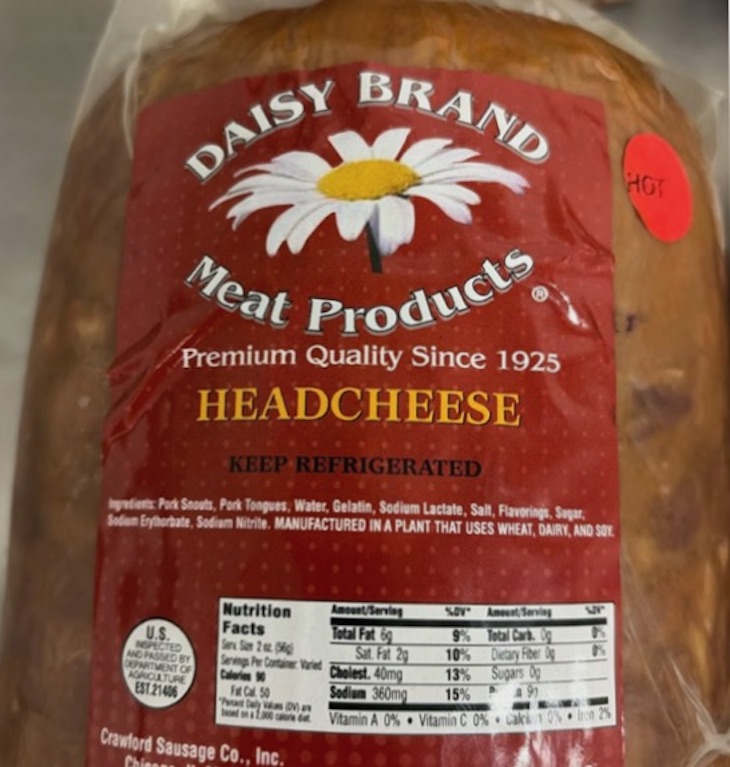
Daisy Headcheese Listeria monocytogenes contamination is the outbreak strain, according to the USDA. Whole genome sequencing was conducted on an unopened package of the deli meat product.
This outbreak has sickened three people; all of them live in Illinois. The CDC has not yet issued any information about this outbreak because, at least for now, it is isolated to that state. We don’t know the patient age range, illness onset dates, where in Illinois the patients live, or if anyone has been hospitalized.
People with listeriosis usually are hospitalized. In fact, the CDC states that nearly everyone who develops listeriosis, the more serious form of the infection, needs to be hospitalized. And this pathogen has a mortality rate of 20 to 25%.
There are two varieties of the head cheese that have been recalled. One is Daisy Headcheese with a use by date of March 26, 2026. The other is Daisy Headcheese that has a red sticker starting “HOT.” The expiration date is also March 26, 2026. The product was prepackaged or sliced to order in retail delis in Illinois, so the packages are of variable weights.
If you bought this headcheese, do not eat it. If you froze it for later consumption, remember that freezing does not destroy this pathogen, and the product is not safe to eat. Throw it away or return it to the place of purchase.
Listeriosis infections start with vomiting and diarrhea. If it progresses to the more serious state, people will suffer from a high fever, stiff neck, and severe headache.
If you ate this head cheese, monitor your health for the symptoms of listeriosis for the next 70 days. If you do get sick, see your doctor.