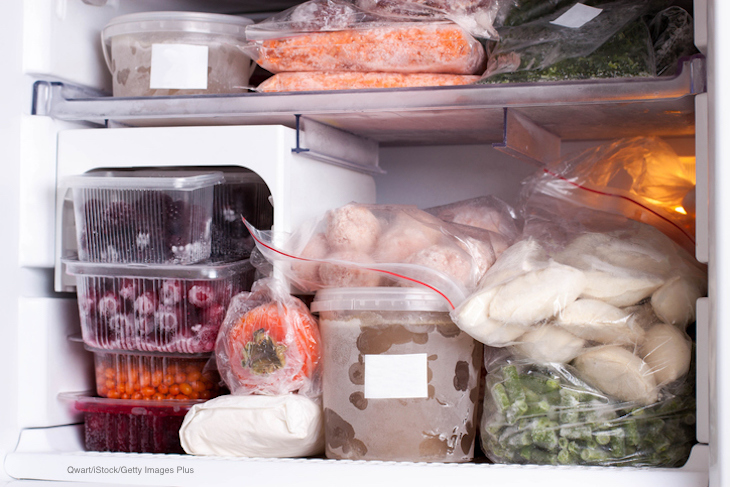
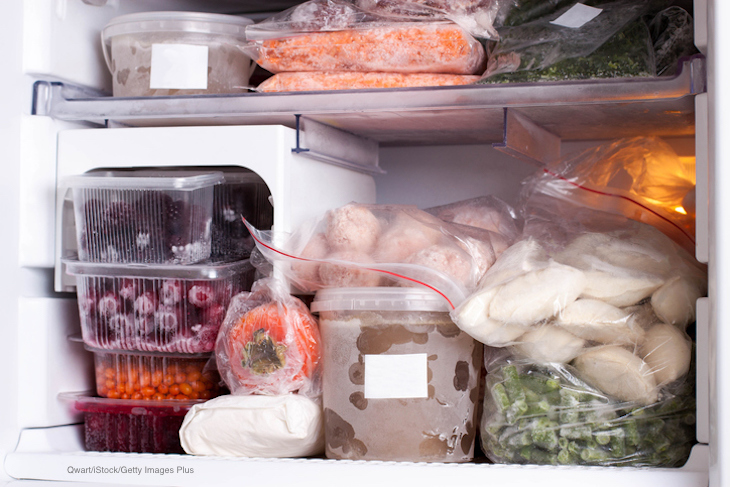
On the topic of keeping frozen food safe: do you know about the penny test? Summer is the time for storms, from thunderstorms to hurricanes. And that usually means power outages. While most outages are over within an hour or two, some can go on for a long time. And, especially if you are away from home for a long period of time, such as on vacation, how do you know if the food in your freezer stayed frozen and safe?
The University of California has the solution from preservation notes from San Joaquin Master Food Preservers: the penny.
There are different ways that food thawing in the freezer can affect it: one effect is quality, the other is safety. If food is thawed just a bit, then refreezes, it can develop freezer burn. That will not affect the safety of the food, but the food may be tough, even after cooking. If the power is off for hours, so the temperature inside the appliance rises to 40°F, bacteria in the food can start to grow. And that can lead to food poisoning.
To use the penny test, fill a small plastic or paper cup with water and put it in the freezer until it freezes completely. Then put a penny on top of the ice and put the whole thing back in the freezer.
If you check and find that the penny is still on top, the temperature inside the freezer kept the food safe. But if the penny has sunk a bit, your food may have developed freezer burn. and if the penny went all the way to the bottom, think about discarding all of the food.
It’s always best to err on the side of caution when it comes to food safety and your health. If you aren’t sure if a food is safe to eat, throw it away. The cost of replacing it is minuscule compared to a serious food poisoning infection, which may require hospitalization.