In-depth analysis from Food Poisoning Bulletin
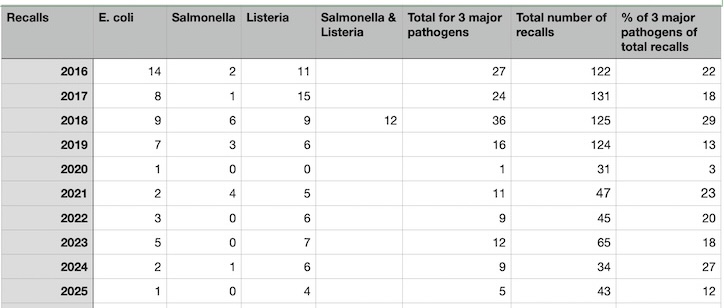
Meat and poultry recalls for bacterial contamination hit a historic low in 2025, according to a Food Poisoning Bulletin review of data published by the U.S. Department of Agriculture’s Food Safety and Inspection Service (USDA FSIS).
Meat and poultry producers issued 43 recalls in 2025, but just five were for bacterial contamination, the lowest total in two decades of available data, excluding 2020.
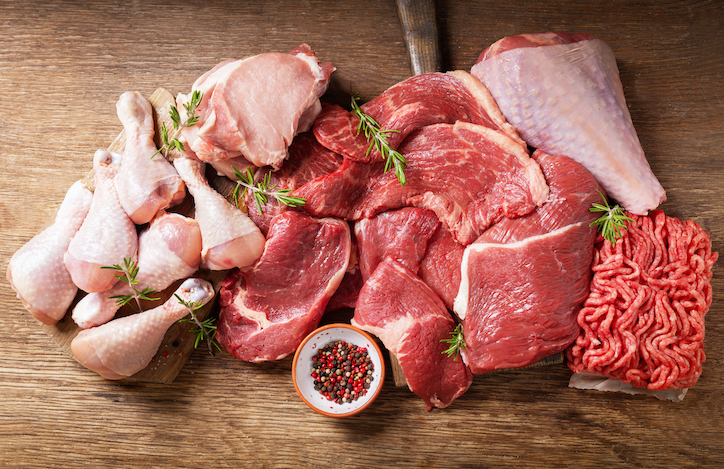
2025 Meat and Poultry Recalls
FSIS recalls are divided into three classes; products subject to Class 1 recalls pose the risk of serious illness or death. In 2025, 39 of the 43 recalls issued for meat and poultry products were Class 1. In addition to bacterial contamination, other categories of Class 1 recalls, and their 2025 totals, are as follows:
- Foreign Matter (13)
- Misbranding/Undeclared Allergen (10)
- Lack of inspection (10)
- Bacterial Contamination (5)
- Import violations (3)
- Other (2)
A Bad Year for Corn Dogs
The Foreign Matter category had the most recalls and the largest recalls by weight, thanks to problematic corn dogs.
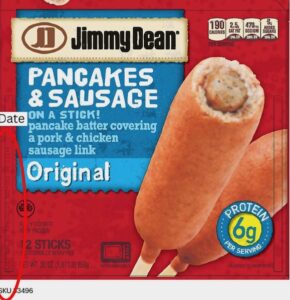
- On September 27, 2025, Hillshire Brands Company of Haltom City, Texas, recalled approximately 58,000,000 pounds of corn dog and sausage on a stick products that may have had wood pieces in the batter.
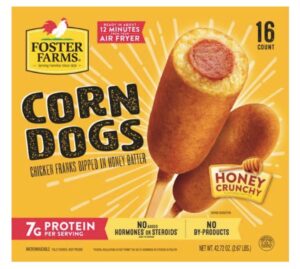
- And, on October 4, Foster Poultry Farms of Livingston, California, recalled more than 4 million pounds of chicken corn dogs for the same reason.
The companies received multiple complaints. At least five people were injured.
Recalls Linked to Pathogens
In 2025, four of the five bacterial-contamination recalls were for Listeria, and one was for E. coli. There were no recalls for Salmonella.
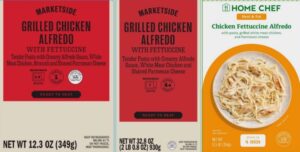
One of the Listeria recalls, for Chicken Fettuccine Alfredo, was associated with the deadliest outbreak of the year. The fettuccine meals were produced by Fresh Realm facilities in San Clemente, California, Montezuma, Georgia, and Indianapolis. They were sold by major retailers throughout the U.S., including Walmart, Trader Joe’s, Albertsons, Kroger, and Sprouts.
The Fresh Realm Listeria outbreak is ongoing. At the end of the year, 27 people in 18 states had been sickened. Six of them have died.
The outbreak was announced in June. In September, results from genetic testing on Listeria extracted from a pasta sample indicated that it matched the outbreak strain cultured from patients. This means that the pasta is the contaminated ingredient and that in 2025, no outbreaks were linked to meat or poultry, which is uncommon. During the last 20 years, that has happened twice before.
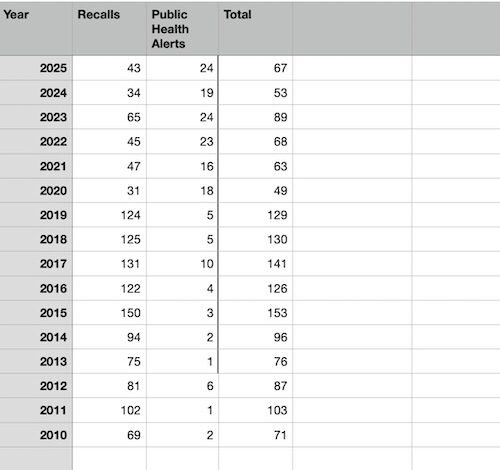
Click Here For Additional Information: How Do Recalls Work? Food companies issue recalls voluntarily with guidance from the USDA FSIS, which regulates meat, poultry and egg products, or the U.S. Food and Drug Administration (FDA), which regulates all other foods. If a meat or poultry company won’t issue a recall, USDA FSIS can take other actions, such as issuing a public health alert, pulling its inspectors from plants to stop production, and seizing products. Public health alerts are common; the other actions are rare. Recalls for USDA FSIS-regulated foods are divided into three classes. Recalls for contamination by a pathogen, Class1, are defined by the agency as “a health hazard situation where there is a reasonable probability that the use of the product will cause serious, adverse health consequences or death. Examples of a Class I recall include the presence of pathogens in ready-to-eat meat or poultry products, or the presence of E. coli O157:H7 or non-O157 Shiga toxin-producing E. coli (STECs) in raw ground beef.” Although Salmonella can and does cause “adverse health consequences” and death” it isn’t considered an adulterant for raw meat and poultry. So, it’s technically legal to sell raw meat or poultry that is contaminated with Salmonella. And companies do. The allowable amounts are: USDA FSIS issued 24 public health alerts (PHAs) in 2025. The agency uses this method to notify the public about a problem with a meat or poultry product when it has decided not to request a recall from a company or when a company has refused to do so. Most often, this happens when the product is no longer for sale. PHAs are similar to recalls but don’t carry the same weight. They’ve become more common in recent years. Before the pandemic, the 10-year annual average for these notifications was about four; now it’s 20. Last year, USDA FSIS issued 24 PHAs, up from 19 in 2024. Eight of those were for bacterial contamination, six for Listeria, and two for E. coli. Recalls and Public Health Alerts 2010 -2025 If you have been sickened with a food poisoning infection, please contact our experienced attorneys for help with a possible lawsuit at 1-888-377-8900 or text us at 612-261-0856. Our firm represents clients in lawsuits against grocery stores, restaurants, and food processors. . Food Recalls are Voluntary
A Health Hazard Situation
Allowable Amounts of Salmonella
Public Health Alerts